Data Center Toolkit
This toolkit is a power-building guide for communities facing data center proposals, with step-by-step tools to learn, investigate, organize, and win real protections and benefits where they live.
What it is
A Michigan-focused, but widely applicable, community toolkit that explains what data centers are, how they harm Black and low-income neighborhoods, and why this is an environmental justice fight.
It centers communities as decision-makers, pushing back on the myth of “clean, invisible” infrastructure and naming the historical structures behind where these facilities are built.
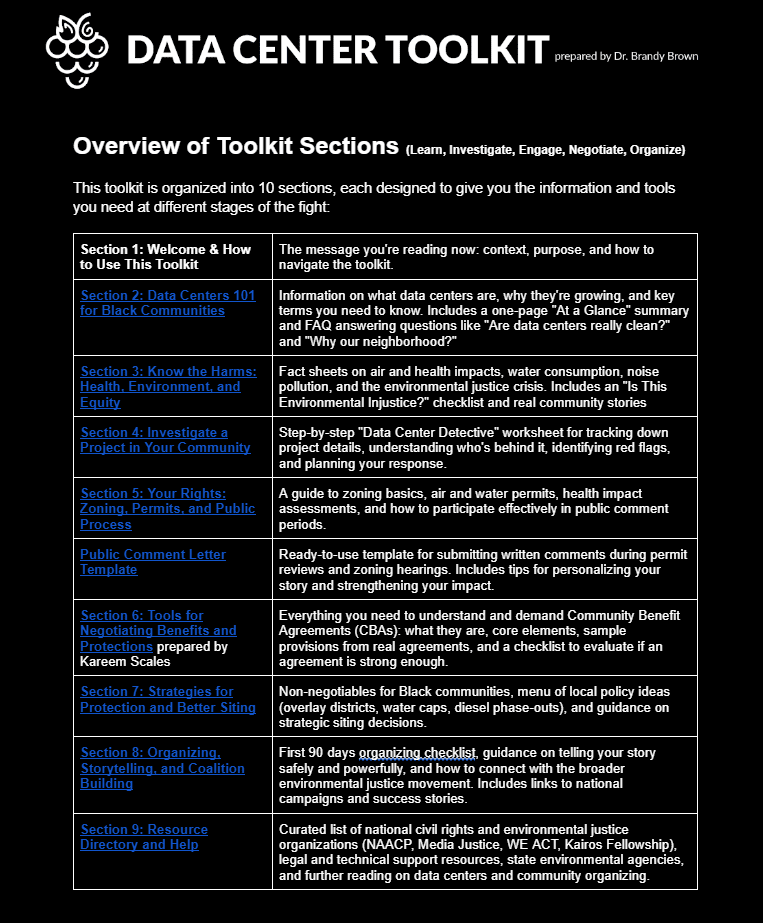
What’s inside
Clear explainers on data centers, growth, and key terms, plus “at a glance” impact summaries and FAQs for residents and local officials.
Fact sheets on air pollution, water use, noise, and equity, along with an “Is This Environmental Injustice?” checklist and real community stories.
A “Data Center Detective” investigation guide and worksheet to uncover who is proposing what, where, and with which permits and approvals.
Tools on zoning, permits, and public comment, including ready-to-use letter and testimony templates grounded in health and racial equity.
A full section on negotiating strong, enforceable Community Benefit Agreements, with checklists and links to national CBA templates and databases.
Strategies for safer siting and local policy (buffers, overlays, caps, disclosure rules) and a “non‑negotiables” list for Black communities.
Organizing resources: a first-90-days campaign checklist, storytelling guidance, and links to national EJ and civil rights campaigns and toolkits.
A curated resource directory of legal, technical, and organizing support, including NAACP, MediaJustice, WE ACT, and other EJ partners.
Who it’s for
Residents, church groups, neighborhood associations, organizers, and policymakers who want to understand projects, intervene early, and center equity in decisions.
Anyone who believes communities are not sacrifice zones and wants practical, ready-to-use tools to demand clean air, clean water, and real accountability from tech companies and local decision-makers.